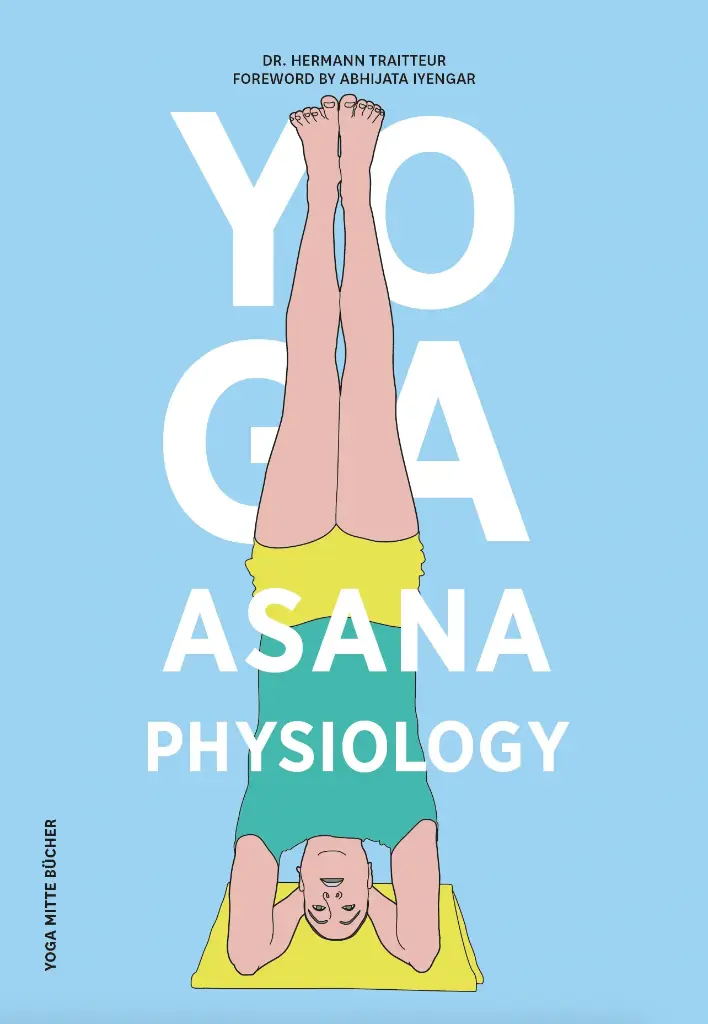
Yoga Asana Physiology
Buch in englischer Sprache
Ein umfassendes und reich illustriertes Nachschlagewerk zu den physiologischen Wirkungen von Asanas. Geschrieben für Praktizierende, Yoga-Schüler:innen, Lehrer:innen und angehende Lehrer:innen sowie alle, die im Bereich der Yogatherapie arbeiten, erklärt das Buch, wie Asanas die Organe und physiologischen Systeme des Körpers beeinflussen – eine Verbindung von medizinischem Wissen mit den Lehren des Iyengar-Yoga.
- Größe: 21 x 30 x 3,5 cm
- Gewicht: 1,5 kg
- 455 Seiten
- Sprache: Englisch (auch auf Deutsch erhältlich)
- Autor: Dr. med. Hermann Traitteur, Yoga Mitte Bücher, Berlin 2026
- Vorwort: Abhijata Iyengar
- Verfügbarkeit:
- Lieferzeit:
- Gewicht:
Das Buch untersucht die Wirkung von Asanas auf:
- das Atmungssystem
- das Herz-Kreislauf-System
- das Verdauungssystem
- das Harnsystem
- das Fortpflanzungssystem
- das Immunsystem
- das endokrine System
- sowie das Nervensystem
Jedes Kapitel erklärt zunächst Anatomie und Funktion der jeweiligen Organe, ihre Regulationsmechanismen sowie den Einfluss des Bewegungsapparates darauf. Besonderes Gewicht liegt darauf, zu verstehen, wie einzelne Asanas und Asana-Sequenzen physiologische Prozesse im gesamten Körper beeinflussen. Über 1000 eigens erstellte Illustrationen machen auch komplexe Zusammenhänge verständlich. Das Buch unterscheidet zwischen klassischen Asanas und mit Hilfsmitteln unterstützten Asanas und zeigt, wie unterschiedliche Praxis-Ansätze zu unterschiedlichen physiologischen Wirkungen führen können. Ein abschließendes Kapitel von Claudia Böhm erweitert die Perspektive um die ayurvedische Sicht auf Physiologie.
- Dr. Hermann Traitteur ist Facharzt für Orthopädie und gründete 1994 gemeinsam mit Claudia Böhm das erste Iyengar-Yoga-Studio im ehemaligen Ost-Berlin, aus dem später das Iyengar Yoga Institut Berlin wurde
- Autor auch von „Yoga Asana Anatomy" sowie Mitherausgeber der „Yogaübungssequenzen"-Reihe und von „Zyklusgerechtes Üben im Iyengar Yoga" – alle bereits in unserem Sortiment
- Auch als deutsche Ausgabe bei uns erhältlich
Bitte beachten: Dieses Buch ist auf Englisch.
Häufig gestellte Fragen zu Yoga Asana Physiology
Für Praktizierende, Yoga-Schüler:innen, Lehrer:innen und angehende Lehrer:innen sowie alle, die im Bereich der Yogatherapie arbeiten – geeignet sowohl ohne medizinisches Vorwissen als auch für erfahrene Lehrer:innen und medizinisches Fachpersonal.
Das Atmungssystem, das Herz-Kreislauf-System, das Verdauungssystem, das Harnsystem, das Fortpflanzungssystem, das Immunsystem, das endokrine System und das Nervensystem.
Dr. Hermann Traitteur ist Facharzt für Orthopädie und gründete 1994 gemeinsam mit Claudia Böhm das erste Iyengar-Yoga-Studio im ehemaligen Ost-Berlin, aus dem später das Iyengar Yoga Institut Berlin wurde. Seit Ende der 1990er-Jahre unterrichtet er Anatomie und Physiologie in der deutschen Iyengar-Lehrer:innen-Ausbildung.
Ja, wir führen auch die deutsche Ausgabe.